The Paradox of Control
The illusion of holding, the exposure of what was never held, and the quiet collapse of the need to interfere

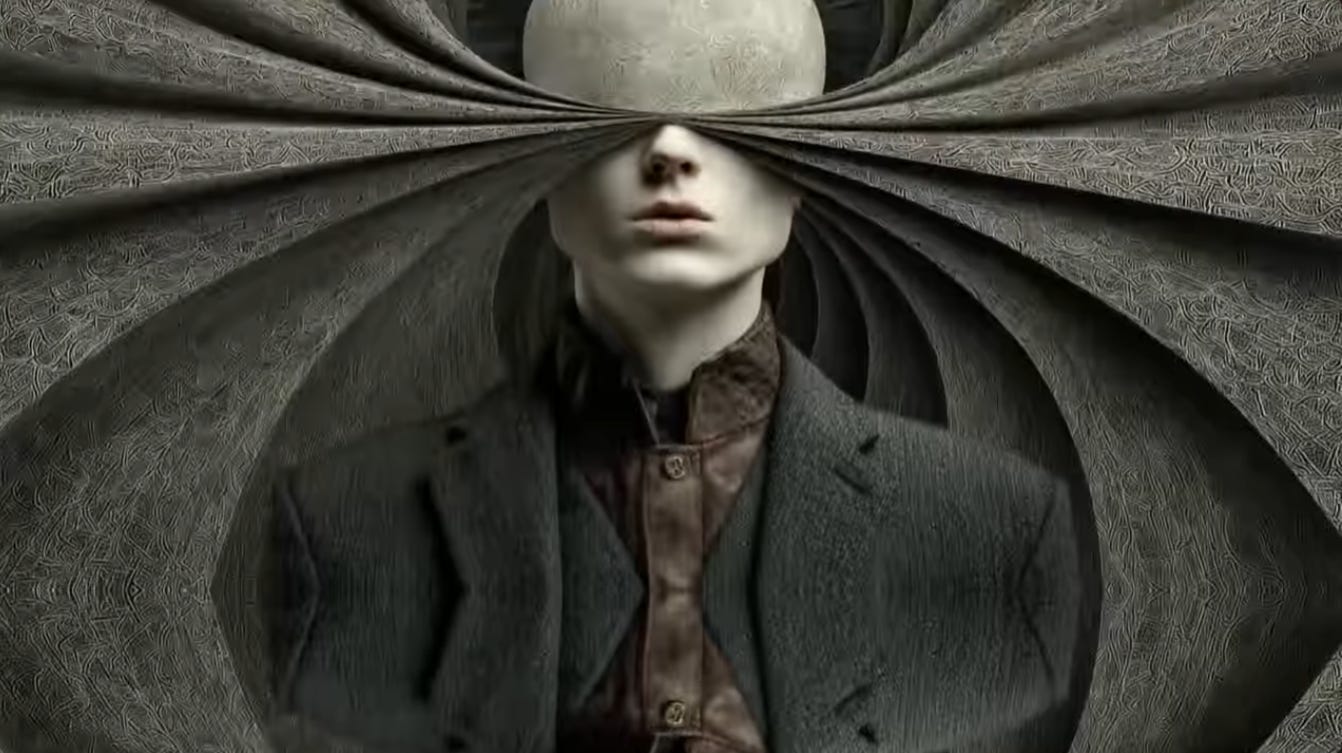
1. The Illusion of Control
Control is imagined like a steady hand holding the entire world in place,
as if outcomes bend to intention, as if precision alone can suspend uncertainty,
as if everything can be aligned if nothing is left to chance or left alone,
and the mind believes this without questioning the cost of the constant holding,
it is the belief that by adjusting enough variables,
by anticipating enough outcomes,
by refining enough details,
nothing will ever fall outside of reach,
as if reality is something waiting to be corrected
rather than something unfolding beyond interference,
but this is not control —
this is resistance disguised as order,
a quiet refusal to meet the world as it is without first shaping it into something easier to tolerate,
because control assumes that if you hold things tightly enough,
nothing will move without permission,
nothing will slip without warning,
nothing will exceed the limits you’ve set in advance,
yet the world does not obey this logic,
it never has,
cause and effect does not wait for approval,
time does not slow for intention,
and outcomes do not ask to be managed before they arrive,
so what appears as control is often just delay,
a temporary arrangement held together by effort,
a fragile balance that only exists while everything remains within your reach,
and the moment something escapes that reach,
the illusion reveals itself —
because nothing was ever being controlled,
only contained,
and containment is not power,
it is pressure applied to something that already moves on its own,
like trying to hold water in an open palm,
like trying to fix a river by standing in its current,
like believing the flow depends on the hand that attempts to contain it,
but the flow continues whether you hold it or not,
and what you call control was never the source of that movement,
only your attempt to interfere with it.
2. The Paradox of Control
Control is imagined like building a ceiling out of invisible material
and believing that because nothing falls through, nothing exists above it,
as if by closing the top, you have defined the entire space beneath it,
as if limitation itself creates authority over what it encloses,
it is the attempt to turn movement into something that can be paused
like trying to hold a flame still without extinguishing it,
to freeze the flicker without removing the heat,
to interrupt a process that only exists because it is allowed to continue
and so control becomes an architecture made of tension,
a structure that only stands because it is constantly being held in place,
like a bridge that depends on your arms to stay suspended,
like a shape drawn in water that only exists while you trace its edges
but what is built this way never stabilizes,
it only maintains the appearance of stability through continuous effort,
because the moment the effort stops,
the structure reveals that it was never self-supporting,
this is where the paradox unfolds,
because the very act of holding something together
is what keeps it from ever standing on its own,
like trying to stabilize a spinning wheel by gripping its rim,
only to discover that your grip becomes part of the instability,
introducing force where there was only motion,
and turning flow into resistance through your intervention
and what you call control is often just this interference,
the insertion of pressure into something that was already in motion,
like placing your hand in the path of a stream
and calling the resulting resistance a sign of influence,
when in reality the stream has not changed direction
because of your intention,
it has only adapted to your presence,
bending, redirecting, continuing,
so the illusion of control is born in that narrow window of interaction
where your input seems to matter because it overlaps with motion,
but once that overlap disappears,
the illusion collapses into something far simpler,
because nothing was ever being controlled,
only intersected,
only influenced within a range that was never absolute,
and the more you try to expand that range,
the more you discover its limits,
like trying to extend your reach into a space that was never designed to be contained,
until control itself becomes the very thing that exposes the boundary,
the constant attempt revealing the edge it cannot cross,
the effort showing where it no longer applies,
because what you are calling control
is not the source of movement,
not the origin of structure,
not the force that determines direction,
it is only your position inside something already unfolding,
a point of contact mistaken for authorship,
a moment of alignment mistaken for command,
and the paradox becomes clear when you stop and look closely,
that everything you are trying to hold together
was already moving before you arrived,
and will continue moving when you are no longer the one holding it.
3. The Architecture of Control
Control rises as an invisible cathedral built from pressure,
pillars carved out of hesitation, arches stretched tight with anticipation,
a ceiling held in place by the refusal to let anything fall into uncertainty,
each thought placed as a stone cut down to fit,
edges shaved until nothing protrudes, nothing challenges the outline,
a silent quarry where rawness is removed until only what conforms remains,
the structure holds because every part is restrained,
because every movement is intercepted before it can widen,
because nothing is allowed to exceed the shape that has been imposed upon it,
inside, a current circulates,
never settling, never resolving,
a flow trapped in endless redirection,
circling the same chambers of adjustment,
pressure becomes the binding force,
a tension woven through every layer,
pulling the structure taut so it cannot reveal its own instability,
and that tension generates its own motion,
a vibration that keeps everything in place while pretending to move forward,
a trembling that masquerades as progress,
every near-arrival pulled back into refinement,
every unfolding redirected into correction,
a sequence that never completes itself because completion would end the need for control,
so the structure sustains itself through interruption,
through the constant insertion of adjustment into every process,
through the quiet refusal to let anything finish on its own terms,
yet beneath the cathedral of pressure, something continues untouched,
a deeper movement that does not require alignment to exist,
a continuity that does not depend on correction to remain intact,
and the more the structure tries to dominate that movement,
the more it reveals that what it claims to hold
was never inside its walls to begin with,
a system feeding on its own insistence,
tightening its own frame to avoid confronting the space beyond it,
until control is no longer a tool,
but the very act of resisting what it cannot contain,
and the question remains suspended beneath it all,
what dissolves when nothing is restrained,
what emerges when the architecture no longer demands to be maintained.
4. The Fragility It Creates
Control builds like stacking glass upon glass and calling it stability,
each layer placed with precision, each edge aligned to prevent imbalance,
until the entire structure exists as something that looks solid from afar
but shatters under the slightest deviation it was never designed to hold,
like balancing a tower on the sharp point of expectation,
where every added layer increases height but reduces tolerance,
until the smallest tremor becomes enough to fracture the entire form,
and the more refined it becomes, the less it can absorb what is real,
like water turned into ice losing its ability to flow,
like a surface hardened to resist impact becoming brittle under pressure,
because what was meant to stabilize now requires constant maintenance,
every moment checked, every outcome adjusted, every deviation corrected,
as if reality itself must be negotiated into compliance before it is allowed to continue,
and this creates a system that only works under controlled conditions,
a narrow corridor of acceptable outcomes,
a narrow band of motion where everything must behave exactly as expected,
but reality does not remain inside corridors,
it bends, it shifts, it expands beyond the lines drawn to contain it,
and the moment it does, the structure reveals its limits,
like a dam built to hold back a river that grows beyond its capacity,
like a net stretched too tight to catch anything without tearing itself apart,
like a surface polished so smooth that even the slightest pressure leaves a mark,
and what appears as strength becomes sensitivity,
because the tighter the system is held,
the more fragile it becomes to anything that falls outside its design,
so now every inconsistency feels like disruption,
every unexpected moment feels like instability,
every deviation feels like something breaking,
when in reality,
what is breaking is not the world,
but the illusion that it was ever meant to stay within the limits imposed upon it,
and this is where fragility reveals itself most clearly,
not in collapse, but in dependence,
in the need for everything to remain exactly as it was configured to be,
because once that configuration shifts, even slightly,
the entire system loses its sense of balance,
not because the world changed,
but because it was never built to tolerate the world as it is,
only the version of it that could be held together by constant effort,
like a structure that survives only while it is being held,
like a balance that disappears the moment attention loosens,
like a form that depends entirely on the tension keeping it from collapsing inward,
and the paradox becomes unavoidable here,
that the more you try to protect stability through control,
the more fragile everything becomes under your influence,
until what you are holding together
is not strength,
but something that cannot exist without you constantly preventing it from breaking.
5. The Inversion Point
Control reaches a point where it no longer feels like structure,
but like something that begins to pull back on itself,
like tension that no longer stabilizes but starts to distort the very thing it was meant to hold,
where every adjustment creates a new imbalance,
every correction introduces another variable,
every attempt to refine reveals another layer that now needs attention,
and what was once a tool becomes a loop,
a cycle that feeds on its own necessity,
a mechanism that survives only by generating more to manage,
like turning a key in a lock that keeps shifting its shape,
like chasing alignment in something that changes form the moment you approach it,
like trying to stabilize a surface that reacts to every contact by becoming something else entirely,
this is where control turns against itself,
where the act of holding begins to produce the very instability it was meant to prevent,
because the system is no longer responding to reality,
it is responding to its own corrections,
to the echo of adjustments layered on top of adjustments,
to the accumulated pressure of never allowing anything to settle on its own,
and at this point, nothing is being stabilized,
everything is being continuously re-stabilized,
which means nothing ever reaches a state where it no longer needs you,
so you remain inside the system as its only constant,
the one element that must never stop acting, never stop adjusting, never stop compensating
for the instability that your own involvement has created,
like holding a spinning object in place by constantly redirecting it,
mistaking the absence of collapse for stability,
when in reality you are just maintaining motion through effort,
and the cost of this is not immediately visible,
because the system still appears to function,
it still produces outcomes, still moves forward, still resembles order from a distance,
but closer in, the structure begins to lose coherence,
not collapsing, but stretching beyond its original shape,
no longer aligned with the intention that created it,
because intention cannot keep pace with continuous correction,
and control, once turned inward upon itself,
becomes less about directing reality and more about managing the consequences of its own interference,
until the question shifts without being asked,
from how do I control this
to what is actually being held together here,
and the answer that begins to surface is uncomfortable,
because what is being held together is not reality,
it is the system built to avoid letting reality exist without interference,
a system that now depends on your constant presence
to prevent it from revealing that it never needed to exist in this form at all.
6. Letting Go Isn’t Passive
Letting go is the moment the grip stops pretending to be necessary,
where what was held together by tension begins to move on its own terms,
not collapsing, but unfolding in directions that were always there,
hidden beneath the pressure that kept them from being seen,
the hand withdraws and the shape it was shaping does not disappear,
it reveals itself as something that never depended on that pressure to exist,
a structure that holds without being held,
a movement that continues without being pushed,
and what once felt like control
now feels like interference that had been mistaken for involvement,
pressure applied to a system that was already functioning before it was touched,
the absence of the hand does not create emptiness,
it removes the distortion that made the movement appear fragile,
and what remains is not loss,
but exposure of what was always operating beneath the effort,
a current that does not pause when attention leaves it,
a rhythm that does not lose coherence when it is no longer being monitored,
a flow that carries itself without asking for guidance,
and in that space the role you thought you were playing dissolves,
not because it was taken from you,
but because it was never required in the first place,
the need to hold begins to look like a layer placed over something self-sustaining,
a tension added where none was needed,
a weight carried where there was already balance,
and when that weight is removed,
nothing breaks, nothing collapses, nothing disappears,
only the illusion of necessity falls away,
leaving behind a system that continues without interruption,
unaware that it was ever being managed at all.
7. What Actually Has Control
Control is imagined like the hand at the center of everything,
the unseen force believed to be steering movement, aligning outcomes,
keeping the structure from falling apart under its own weight,
but beneath that idea there is another layer,
something quieter, something that does not announce itself through effort,
something that continues even when effort disappears,
a rhythm that carries the body without permission,
breath that rises and falls without instruction,
systems that function without ever asking to be managed,
organs that do not pause to consult intention before they act,
blood that moves without negotiation,
a structure that maintains itself without supervision,
and this is where the illusion begins to break,
because what you believed required constant involvement
is already operating beneath the level of involvement,
like a machine running in the background while attention fixates on the noise in the foreground,
like a current moving beneath the surface while the mind focuses on the ripples above,
you step into the flow and believe you are guiding it,
when in reality you are simply occupying a point within it,
a position where movement passes through, not from,
and the more you try to isolate control as something you possess,
the more you discover it is distributed across processes that do not answer to you,
systems that function without needing to be directed,
like gravity holding everything in place without announcing itself,
like time moving forward without instruction,
like patterns forming and dissolving without requiring approval,
and what you call control
is often just alignment with forces already in motion,
a moment where your direction matches what is already unfolding,
but when that alignment shifts,
when the system moves outside the narrow range you can track,
the sense of control disappears,
not because control was lost,
but because it was never located in a single place to begin with,
it was always spread across layers,
across interactions, across processes that continue regardless of your awareness,
and the deeper you look,
the more it becomes clear that nothing depends on one point of command,
nothing waits to be instructed before it exists,
everything is already moving,
already maintaining itself,
already functioning in ways that do not require your intervention,
and the role you thought you were playing
was never the source of that movement,
only a moment within it,
a point of contact mistaken for authorship,
a position mistaken for control.
8. The Identity Built on Control
Control becomes a mask carved through constant correction,
a face formed by the pressure of keeping everything aligned,
until the mask no longer feels worn but worn into,
until the one who adjusts becomes indistinguishable from the adjustment itself,
a figure standing at the center of moving parts,
hands never resting, always intervening, always preventing drift,
a presence defined not by what it is, but by what it keeps from shifting,
and the self begins to assemble itself from that motion,
not discovered, not revealed, but constructed through interference,
a structure built from what is repeatedly shaped and reshaped to avoid deviation,
until identity is no longer a point of being,
but a process of maintaining form,
a continuous act of holding together what only remains intact through effort,
stillness begins to feel like erosion,
because without movement the structure loses its reinforcement,
and without reinforcement the edges begin to soften,
and without edges the shape begins to dissolve into something unrecognizable,
so movement continues,
not as expression but as maintenance,
a cycle of correction that sustains the idea of being in control,
hands that never rest become the proof of existence,
attention that never settles becomes the measure of awareness,
constant adjustment becomes the evidence that something is being held together,
and yet beneath that constant activity, something remains untouched,
something that does not depend on shaping to exist,
something that does not weaken in the absence of interference,
but that layer is not approached,
because it does not confirm the structure that has been built,
it does not require control to remain intact,
it does not validate the role that has been constructed around holding,
so the system continues,
repeating, adjusting, reinforcing,
until the act of maintaining becomes indistinguishable from identity itself,
and what was once a method becomes a mask,
what was once a role becomes a body,
what was once a function becomes the only way of being recognized,
leaving the question beneath everything else,
what remains when the maintaining stops,
what remains when nothing is being shaped,
what remains when the structure is no longer being held in place.
9. The Collapse That Never Happens
The hand withdraws and nothing falls apart,
no hidden fault line tears through the structure, no silent fracture opens under the surface,
only the quiet disappearance of strain,
and with it the illusion that strain was ever holding anything together,
the imagined disaster stands in the mind like a monument,
a tower built from anticipation, from rehearsed collapse, from the belief that without pressure everything would unravel,
yet the moment the pressure lifts, the tower remains only as a shadow that never touches reality,
a system continues without its supposed operator,
processes unfolding in their own language,
currents threading through pathways that were never waiting to be directed,
a body remembering its own movement without asking permission from the one who claimed to guide it,
what was believed to be held in place by force
reveals itself as something that never required that force to remain intact,
as if the effort was never the glue, only the noise masking the fact that nothing needed fixing,
the expectation of collapse was a prophecy written by dependence,
a story told by the one who could not imagine functioning without interference,
so collapse was invented as the price of release,
but the release arrives and refuses the script,
refuses to fracture, refuses to dissolve, refuses to justify the effort that preceded it,
and in that refusal, something shifts,
because what was thought to be fragile begins to show its own indifference to pressure,
standing without being propped, moving without being pushed, existing without being upheld,
like a structure that does not remember the hands that once hovered around it,
like a system that continues to run after the one who claimed ownership steps away,
like a current that never pauses to acknowledge whether it is being watched,
and the deeper the stillness becomes,
the clearer it is that nothing depended on the constant interference that once felt necessary,
the fear of collapse dissolves not through confrontation,
but through the absence of collapse itself,
through the quiet revelation that there was never anything in place that required saving,
only something that was being obscured by the very effort meant to preserve it,
and when that effort disappears,
what remains is not destruction,
but a structure that continues as if nothing was ever trying to hold it together,
because nothing ever had to.
10. Beyond Control
The moment the need to hold dissolves, something deeper surfaces,
not an absence, but a presence that was never dependent on force,
a structure that stands without the weight of interference,
what remains is not shaped by effort,
not stabilized by correction,
not defined by the act of managing outcomes,
it is the quiet architecture that existed beneath all attempts to organize it,
a field of continuity that does not require tension to hold its form,
a system that persists without needing to be directed into existence,
and in that realization, the role that was once worn so tightly begins to fall away,
not through struggle, but through irrelevance,
not through collapse, but through exposure,
what you were holding together was never the source of cohesion,
it was a layer placed over something that already functioned in silence,
something that did not need to be maintained to remain intact,
and as that layer dissolves,
the weight that once defined your position disappears with it,
leaving behind a space that does not demand control,
does not require intervention,
does not depend on you to exist,
and this is where the work shifts,
because what you called control was never the point,
it was the noise obscuring what was already operating beneath it,
my book does not add more weight to carry,
it removes the illusion that carrying was ever necessary,
stripping away the layers that made effort feel like identity,
until only what cannot be reduced remains,
what you are left with is not something to manage,
not something to improve,
not something to hold together,
but something that stands without explanation,
something that does not fracture under observation,
something that does not need to be defended to exist,
and in that, the paradox resolves itself,
not through control,
but through the absence of its necessity,
leaving you not as the one who holds reality in place,
but as something that exists within a reality that never needed holding at all.
Link to my book The Unseen Truth -
https://mindreset.carrd.co/
Notice where you’re forcing control in your day and pause before acting. Let one thing unfold without interference, and observe what actually happens.